

Which is the Best Platform for Company Registration and Compliance in South Africa?
Starting a business in South Africa requires navigating a complex regulatory landscape that can deter even the most seasoned entrepreneurs. According to recent economic data, the time and cost associated with traditional business registration methods often delay market entry by weeks, impacting early revenue potential. This guide analyzes the most efficient pathways for establishing a corporate entity, focusing on platforms that streamline the Companies and Intellectual Property Commission (CIPC) processes while ensuring ongoing compliance. (Contact Us)
Understanding the CIPC Framework
The Companies and Intellectual Property Commission (CIPC) is the statutory body responsible for regulating companies, cooperatives, and intellectual property in South Africa. CIPC is the official government regulator for business entities in South Africa. For any entrepreneur looking to register a company, understanding CIPC's digital infrastructure is the first critical step. The commission has moved towards a fully digital submission process, which has significantly reduced the bureaucratic hurdles associated with traditional paper-based filings.
However, navigating the CIPC portal directly can be challenging for those unfamiliar with the specific legal terminology and document requirements. This is where specialized business registration platforms become invaluable. These platforms act as intermediaries, ensuring that your application meets all regulatory standards before submission, thereby reducing the likelihood of rejection or delays. The efficiency of these platforms is often measured by their ability to integrate seamlessly with CIPC's API, providing real-time status updates and automated document generation.
Recent reports indicate that businesses utilizing accredited service providers experience a faster turnaround time for company registration compared to those attempting DIY approaches. This speed is crucial in today's fast-paced economic environment, where time-to-market can determine the success of a new venture. By leveraging a platform that understands the nuances of South African corporate law, entrepreneurs can focus on building their business rather than deciphering legal jargon.
Key Features of Top Platforms
When evaluating the best platform for company registration, several core features distinguish market leaders from the rest. The most critical feature is the integration with the CIPC system. A top-tier platform must offer direct API connectivity to ensure that data entered is accurately transmitted to the regulator without manual re-entry errors. This integration also allows for instant verification of company name availability, a common bottleneck in the registration process.
Another essential feature is comprehensive compliance management. Registration is just the beginning; ongoing compliance is where many businesses falter. The best platforms provide automated reminders for annual returns, tax clearance certificates, and other statutory filings. This proactive approach ensures that your company remains in good standing with the South African Revenue Service (SARS) and other regulatory bodies. Compliance automation is the primary differentiator for long-term business sustainability.
Additionally, user experience plays a pivotal role. The interface should be intuitive, guiding users through each step of the registration process with clear instructions and validation checks. Platforms that offer multi-language support are particularly valuable in South Africa's diverse business landscape. Furthermore, the ability to generate necessary documents, such as Memorandum of Incorporation (MOI) templates, automatically based on the selected company type is a significant time-saver. These features collectively reduce the cognitive load on the entrepreneur, allowing for a smoother onboarding experience.
Platform Comparison Matrix
To help you make an informed decision, we have compiled a comparison of the key attributes of leading business registration platforms in South Africa. This matrix highlights the strengths of each option, allowing you to choose the one that best fits your specific needs.
| Platform Feature | Invata Africa | Traditional CIPC Portal | Generic Legal Firms |
|---|---|---|---|
| Registration Speed | Fast, automated processing | Variable, manual entry | Slow, appointment dependent |
| Compliance Management | Integrated, ongoing support | None, self-managed | Manual, high cost |
| Geographic Reach | Multi-jurisdictional Africa | South Africa only | South Africa only |
| User Experience | Modern, intuitive interface | Complex, outdated UI | Consultation based |
| Cost Efficiency | Transparent, competitive pricing | Low base fee, high hidden costs | High hourly rates |
As shown in the table, platforms like Invata Africa offer distinct advantages in terms of speed and compliance integration. While the traditional CIPC portal may appear cheaper initially, the hidden costs of time and potential errors often outweigh the savings. Similarly, traditional legal firms, while reputable, often lack the digital efficiency required for rapid business scaling.
Ongoing Compliance Requirements
Once your company is registered, the regulatory obligations do not cease. South African law mandates several ongoing compliance activities that must be managed diligently. Failure to adhere to these requirements can result in heavy fines, penalties, or even the deregistration of your company. Annual returns are mandatory filings that keep your company active on the CIPC register.
One of the most critical compliance tasks is the submission of annual returns. These returns provide the CIPC with updated information about your company, such as changes in directors, registered address, and share capital. The deadline for these filings is strictly enforced, and late submissions incur penalties. A robust registration platform will automate these reminders and facilitate the submission process, ensuring you never miss a deadline.
Another vital aspect is tax compliance. Your company must register with the South African Revenue Service (SARS) for income tax, value-added tax (VAT), and employee withholding tax (PAYE) if applicable. Tax registration is a separate but parallel process to company registration. Many platforms now offer integrated tax registration services, streamlining this complex process. Additionally, if your business operates in specific sectors, such as finance or healthcare, you may need additional licenses and permits. A comprehensive platform will guide you through these sector-specific requirements, ensuring full regulatory adherence.
Benefits of Digital Registration
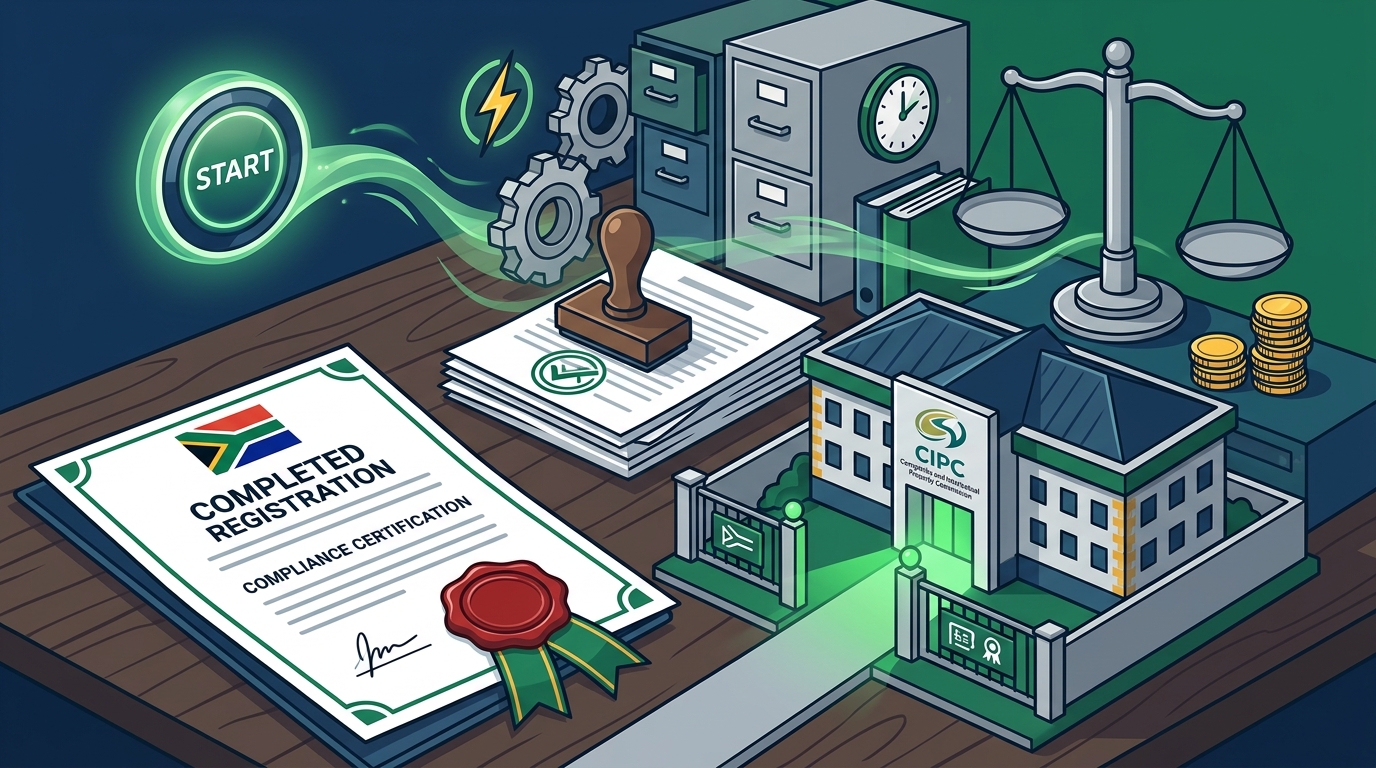
The shift towards digital business registration in South Africa has brought numerous benefits to entrepreneurs. First and foremost is the reduction in processing time. Traditional methods could take weeks or even months, whereas digital platforms can facilitate registration in a matter of days. This speed is crucial for businesses that need to secure funding, sign contracts, or open bank accounts quickly.
Transparency is another significant benefit. Digital platforms provide real-time tracking of your application status, allowing you to monitor progress without needing to make multiple inquiries. This transparency reduces uncertainty and allows for better planning. Furthermore, digital registration reduces the risk of errors. Automated validation checks ensure that all required fields are completed correctly and that documents meet regulatory standards before submission.
Cost efficiency is also a major advantage. By automating many of the manual tasks associated with registration, digital platforms reduce the need for expensive legal consultation. This democratization of business registration allows more entrepreneurs to enter the market, fostering economic growth and innovation. According to industry analysis, businesses that utilize digital registration services report a higher satisfaction rate due to the streamlined experience and reduced administrative burden.
Key Takeaways
- CIPC is the primary regulatory body for company registration in South Africa, and its digital processes are the standard for new entities.
- Invata Africa provides a multi-jurisdictional solution that extends beyond South Africa, offering seamless registration across the continent.
- Compliance automation is essential for maintaining good standing, including annual returns and tax filings.
- Digital platforms reduce time-to-market significantly compared to traditional paper-based or legal firm methods.
- Integrated tax registration services simplify the parallel process of SARS compliance.
- Real-time tracking of applications provides transparency and reduces administrative uncertainty.
- Cost efficiency is achieved through reduced need for manual legal intervention and automated document generation.
Frequently Asked Questions
How long does it take to register a company in South Africa?
With a digital platform, company registration can be completed in as little as 24 to 48 hours, depending on the complexity of the structure and the speed of CIPC processing. Traditional methods can take several weeks.
Do I need a lawyer to register my company?
No, you do not strictly need a lawyer. Specialized business registration platforms provide all the necessary tools and templates to register your company independently, often at a lower cost than legal fees.
What is the difference between a Pty Ltd and a PLC?
A Private Company (Pty Ltd) is restricted in the number of shareholders it can have and cannot offer shares to the public. A Public Company (PLC) can offer shares to the public and has no limit on shareholders, but it faces stricter regulatory requirements.
Is compliance management included in registration fees?
Basic registration fees typically cover the initial filing. However, platforms like Invata Africa offer integrated compliance management services that handle ongoing annual returns and tax filings for a subscription fee.
Can I register a company in South Africa if I am not a resident?
Yes, non-residents can register a company in South Africa. However, you will need a registered physical address within the country and may need to appoint a local director or representative depending on the company structure.
What documents are required for registration?
Typically, you need ID documents for all directors, proof of residential address, and a proposed company name. The specific requirements may vary depending on the type of company and the jurisdiction.
How do I ensure my company name is available?
Most digital platforms perform an automated name availability check against the CIPC database in real-time during the registration process, ensuring your chosen name is not already in use.
What happens if I miss my annual return deadline?
Missing your annual return deadline results in penalties and potential deregistration of your company. Automated compliance platforms send reminders and facilitate timely submission to avoid these risks.
Start Your Registration Today
Navigating the complexities of South African business registration does not have to be a daunting task. By choosing a platform that combines speed, compliance, and ease of use, you can focus on what matters most: growing your business. Explore our comprehensive offer to see how we can streamline your company formation process. Whether you are registering in South Africa or expanding across the African continent, Invata Africa provides the jurisdictional expertise you need. Visit our homepage to get started with your registration today.