

Starting a business in Nigeria requires navigating a complex regulatory landscape that can stall growth before it begins. According to the World Bank's Doing Business report, establishing a company in Nigeria historically involved significant time and procedural hurdles, though recent reforms have streamlined the process. Despite these improvements, the Corporate Affairs Commission (CAC) still demands precise documentation and strict adherence to statutory requirements. For entrepreneurs, the choice of registration partner determines not just speed, but long-term legal security and operational continuity. (Invata Africa Form run)
Understanding CAC Requirements
The Corporate Affairs Commission (CAC) is the sole regulatory body responsible for company incorporation in Nigeria. To register a business, you must first determine the appropriate business structure. The most common entities are the Limited Liability Company (LLC) and the Business Name (BN). Each structure carries distinct legal implications regarding liability, taxation, and governance. (Contact Us)
Company registration is the formal process of legally establishing a business entity with the government. This process involves submitting specific forms, such as Form CAC 1.1 for name reservation and Form CAC 2.1 for incorporation. The CAC requires detailed information about the company's name, registered office address, and the particulars of its directors and shareholders.
Compliance is the ongoing obligation to adhere to laws, regulations, and guidelines set by the CAC and other relevant authorities. After registration, businesses must file annual returns, maintain statutory registers, and adhere to tax obligations managed by the Federal Inland Revenue Service (FIRS). Failure to comply can result in heavy penalties, fines, or even the striking off of the company from the register.
Key Evaluation Criteria
When selecting a service provider for company registration and compliance, several critical factors must be evaluated. The market is saturated with agencies, but not all offer the same level of expertise or reliability. You need a partner who understands the nuances of Nigerian corporate law and can navigate bureaucratic delays effectively.
Transparency is paramount in service delivery. A reputable provider will offer clear pricing structures without hidden fees. They should provide real-time updates on the status of your application and maintain open lines of communication throughout the process. Look for providers who offer comprehensive support, including post-registration services like tax registration and permit acquisition.
Expertise in local regulations is another vital criterion. The regulatory environment in Nigeria changes frequently, with new guidelines issued by the CAC and other agencies. A provider with deep institutional knowledge can anticipate these changes and advise you on how they impact your business. They should also be able to handle complex scenarios, such as foreign ownership restrictions or sector-specific licensing requirements.
Service Comparison
Choosing the right provider involves comparing different service models. Some agencies focus solely on registration, while others offer end-to-end business formation and compliance management. Below is a comparison of typical service offerings in the Nigerian market.
| Service Provider Type | Core Offerings | Best For | Limitations |
|---|---|---|---|
| Traditional Law Firms | Legal advice, document drafting, litigation support | High-value transactions, complex corporate structures | Higher costs, slower turnaround times |
| Online Business Platforms | Automated registration, digital document management | Startups, SMEs seeking speed and convenience | Limited personalized legal support |
| Specialized Compliance Agencies | End-to-end registration, annual returns, tax filing | Businesses needing ongoing regulatory support | May lack deep legal litigation capabilities |
Platforms like Invata Africa specialize in bridging the gap between traditional legal services and modern digital efficiency. They offer streamlined processes for company formation across multiple African jurisdictions, including Nigeria. By leveraging technology, they reduce the administrative burden on entrepreneurs, allowing them to focus on growth rather than paperwork.
When evaluating providers, consider their track record in handling similar business types. A provider experienced in tech startups may offer different value propositions than one focused on manufacturing or import/export businesses. Check for client testimonials and case studies that demonstrate successful registrations and compliance management.
Compliance Challenges
Post-registration compliance is often where businesses struggle. The initial excitement of incorporation fades when faced with the reality of annual filings, tax deadlines, and regulatory audits. Many small business owners underestimate the complexity of maintaining good standing with the CAC and FIRS.
Tax registration is a critical step after company incorporation. Businesses must obtain a Taxpayer Identification Number (TIN) and register for Value Added Tax (VAT) if applicable. The process involves submitting various documents, including the CAC certificate and proof of address. Non-compliance with tax regulations can lead to severe penalties, including interest charges and legal action.
Annual returns must be filed within six months after the end of the financial year. These returns provide the CAC with updated information about the company's financial status and ownership structure. Failure to file annual returns can result in the company being struck off the register, effectively dissolving the business entity. This can have devastating consequences for contracts, bank accounts, and intellectual property rights.
Regulatory changes in Nigeria can impact business operations significantly. For instance, recent updates to the Companies and Allied Matters Act (CAMA) have introduced new requirements for corporate governance and reporting. Staying informed about these changes is essential for maintaining compliance. A reliable service provider will monitor these developments and advise you on necessary adjustments to your business practices.
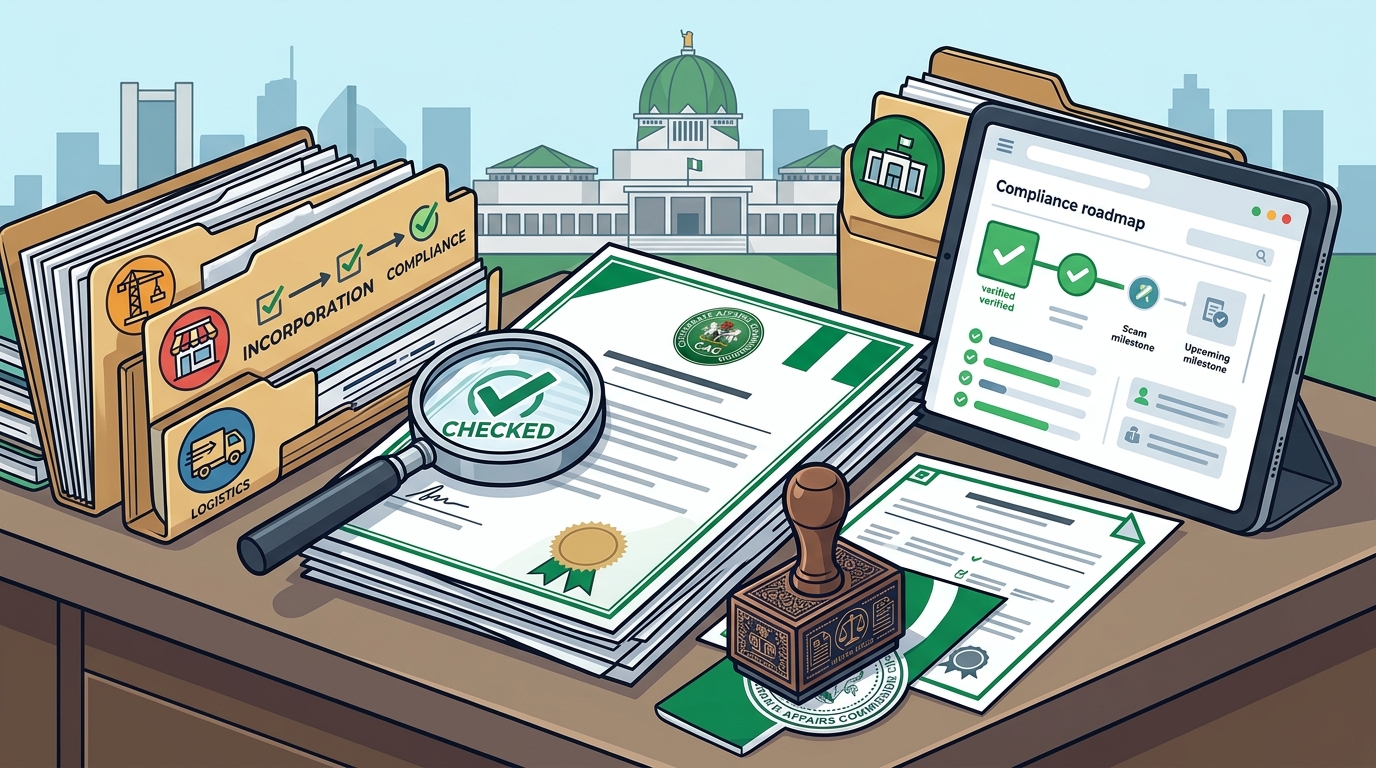
Key Takeaways
- The Corporate Affairs Commission (CAC) is the primary regulatory body for company registration in Nigeria.
- Company registration is the formal process of legally establishing a business entity with the government.
- Compliance is the ongoing obligation to adhere to laws, regulations, and guidelines set by the CAC and other relevant authorities.
- Choosing a provider with expertise in local regulations can prevent costly delays and penalties.
- Annual returns must be filed within six months after the end of the financial year to maintain good standing.
- Tax registration is a critical step after company incorporation, requiring a Taxpayer Identification Number (TIN).
- Platforms like Invata Africa offer streamlined processes for company formation across multiple African jurisdictions.
Frequently Asked Questions
How long does it take to register a company in Nigeria?
The timeline for company registration in Nigeria varies depending on the complexity of the application and the efficiency of the service provider. Typically, the process can take anywhere from two weeks to several months. Using a specialized platform can significantly reduce this timeframe by streamlining document preparation and submission.
What are the main types of business structures in Nigeria?
The most common business structures in Nigeria are the Limited Liability Company (LLC) and the Business Name (BN). An LLC offers limited liability protection to its shareholders, while a Business Name is simpler to register but does not provide the same level of liability protection. Other structures include partnerships and sole proprietorships.
Do I need a local agent to register a company in Nigeria?
Foreign investors often require a local agent or partner to facilitate the registration process. This is because certain regulatory requirements, such as having a registered office address in Nigeria, must be met. A local service provider can help navigate these requirements and ensure compliance with local laws.
What is the cost of registering a company in Nigeria?
The cost of company registration in Nigeria includes government fees, professional service fees, and other incidental costs. Government fees are based on the company's share capital, while professional service fees vary depending on the provider. It is essential to get a detailed quote from your service provider to understand the total cost.
How can I ensure my company remains compliant after registration?
To ensure ongoing compliance, businesses must file annual returns, maintain accurate financial records, and adhere to tax obligations. Engaging a professional service provider for compliance management can help ensure that all regulatory requirements are met on time, avoiding penalties and legal issues.
What documents are required for company registration?
The documents required for company registration in Nigeria typically include a completed application form, proof of identity for directors and shareholders, a proposed company name, and a registered office address. Additional documents may be required depending on the specific business structure and industry.
Can I register a company in Nigeria remotely?
Yes, it is possible to register a company in Nigeria remotely through online platforms and service providers. These platforms facilitate the submission of documents and communication with the CAC, allowing entrepreneurs to complete the process without being physically present in Nigeria.
Get Started Today
Navigating the complexities of company registration and compliance in Nigeria does not have to be a daunting task. By choosing the right service provider, you can ensure a smooth and efficient process, allowing you to focus on what matters most: growing your business. Whether you are a local entrepreneur or an international investor, having a reliable partner is essential for success in the Nigerian market.
Take the first step towards establishing your business in Nigeria with confidence. Visit Invata Africa to explore our comprehensive services for company formation and compliance. Our team of experts is ready to guide you through every step of the process, ensuring that your business is set up for long-term success. Contact us today to schedule a consultation and discover how we can help you achieve your business goals.