

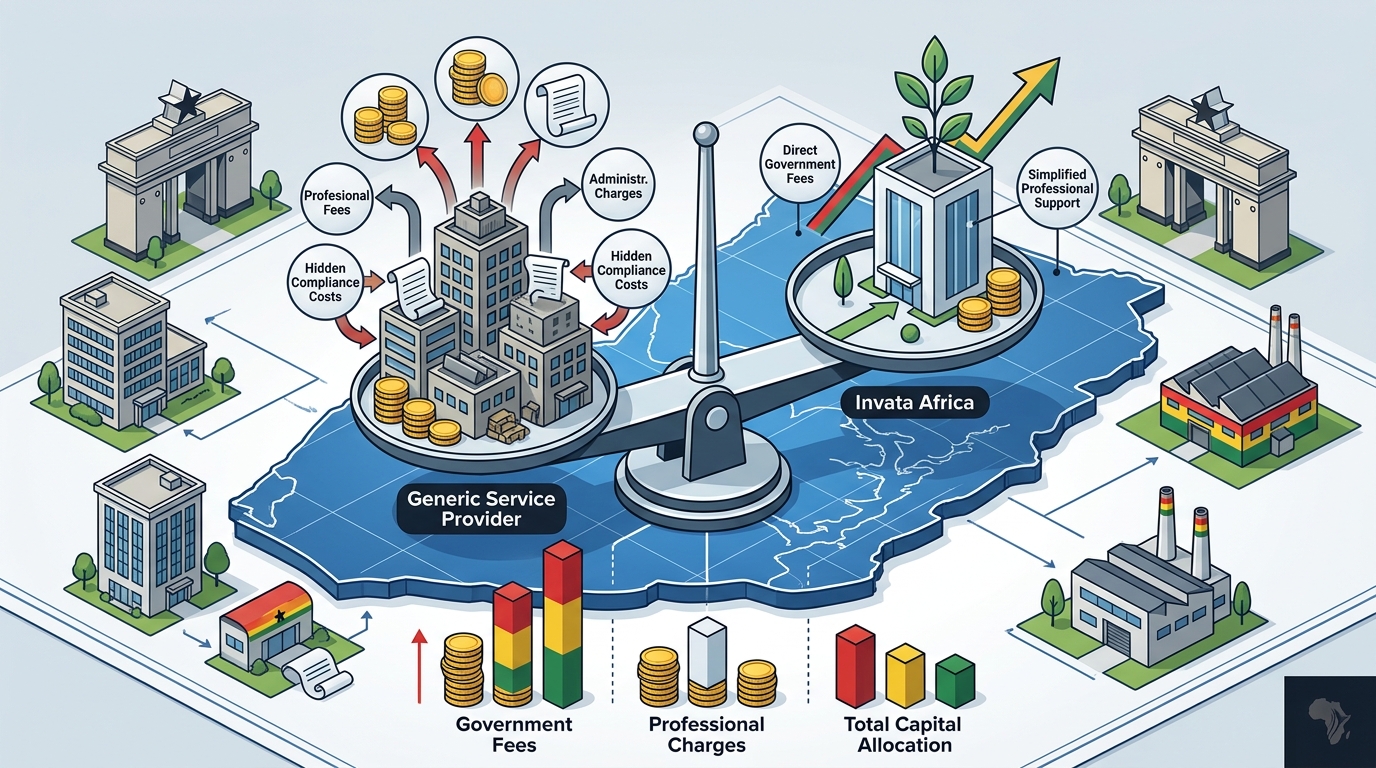
Starting a business in Ghana requires navigating a complex regulatory landscape where administrative fees, professional service charges, and hidden compliance costs can significantly impact your initial capital. According to recent economic data, the cost of starting a business in Ghana has fluctuated, with official government filing fees forming only a fraction of the total expenditure when professional assistance is required. Many entrepreneurs underestimate the total cost, which often includes name reservation, registered office address services, and ongoing statutory compliance. This guide breaks down the financial realities of registering a company in Ghana, comparing the value propositions of different service models to help you allocate your budget effectively. (Contact Us)
Understanding the Cost Structure
To accurately compare registration platforms, you must first understand what constitutes the total cost. The process is not a single transaction but a series of mandatory steps. Company registration is the legal process of incorporating a business entity with the Registrar General's Department (RGD). This definition highlights that the cost is tied to legal recognition, not just administrative paperwork.
The costs generally fall into three categories: statutory government fees, professional service fees, and ancillary compliance costs. Government fees are fixed and non-negotiable. Professional fees vary based on the complexity of the service and the provider's expertise. Ancillary costs include registered office addresses, tax registration, and sector-specific licenses. Ignoring any of these components leads to budget overruns and operational delays.
Government Fees vs. Service Fees
Many first-time entrepreneurs confuse the cost of filing with the cost of incorporation. The Registrar General's Department charges a base fee for name reservation and company incorporation. These fees are standardized and published on the official government portal. However, these fees do not cover the preparation of constitutional documents, due diligence, or post-incorporation compliance setup.
Professional service providers charge for their expertise in navigating these requirements efficiently. Registered office address is a mandatory requirement for all companies in Ghana. This definition underscores a critical cost center that DIY platforms often omit from their initial price quotes. Providers like Invata Africa bundle these essential services to provide a transparent total cost of ownership. When comparing platforms, always ask if the quoted price includes a physical registered address in Accra or Kumasi.
Platform Comparison: DIY vs. Professional Services
The market for company registration in Ghana is divided between digital DIY platforms and full-service professional agencies. Each model offers distinct financial advantages and disadvantages. Understanding these differences is crucial for optimizing your startup budget.
Digital DIY Platforms
Digital platforms offer lower upfront costs by automating the form-filling process. They are suitable for simple business structures with straightforward ownership. However, these platforms often charge extra for name reservation, document generation, and expedited processing. The total cost can escalate quickly if errors occur during the filing process, requiring re-submission fees.
Full-Service Professional Agencies
Professional agencies charge a premium for end-to-end management. This model includes legal review, name clearance, incorporation, tax registration, and issuance of the certificate of incorporation. While the initial outlay is higher, the risk of rejection or delay is significantly reduced. Jurisdiction-specific compliance is handled with precision, ensuring that your business meets all local regulatory requirements from day one.
Cost Comparison Table
The following table summarizes the typical cost components associated with different registration approaches in Ghana. These figures are estimates based on current market standards and may vary based on company capital and specific service inclusions.
| Service Component | Digital DIY Platform | Professional Agency | Government Statutory Fee |
|---|---|---|---|
| Name Reservation | $10 - $20 | Included | $10 |
| Company Incorporation | $50 - $100 | $200 - $500 | $100 - $300 |
| Registered Office Address | Extra $50/year | Included | N/A |
| Tax Registration (GhIPPS) | DIY Required | Included | $0 |
| Total Estimated Cost | $100 - $200+ | $300 - $600 | $110 - $310 |
Hidden Costs to Avoid
Beyond the visible fees, several hidden costs can impact your bottom line. One common pitfall is the cost of maintaining statutory compliance. Companies must file annual returns and update their registered office details regularly. Failure to do so results in penalties and potential strike-off from the register.
Another hidden cost is the delay in obtaining a Tax Identification Number (TIN). Without a TIN, your business cannot open a corporate bank account or pay taxes legally. Some platforms offer basic registration but leave tax registration to the client, leading to further delays and professional fees later. Comprehensive service packages eliminate these gaps by handling all post-incorporation steps. This approach ensures that your business is fully operational and compliant from the moment of incorporation.
Key Takeaways
- Government filing fees for company incorporation in Ghana typically range from $100 to $300, depending on the authorized capital.
- Name reservation is a mandatory first step, costing approximately $10, and must be completed before incorporation.
- Professional agencies charge between $300 and $600 for full-service incorporation, including registered office and tax registration.
- Digital DIY platforms may appear cheaper initially but often incur additional fees for name reservation, document generation, and address services.
- A registered office address in Ghana is a legal requirement, and using a virtual office service is a cost-effective solution for startups.
- Annual compliance costs, including annual returns and tax filings, add to the long-term cost of maintaining a company in Ghana.
- Choosing a platform with transparent pricing prevents budget overruns and ensures all statutory requirements are met.
Frequently Asked Questions
How much does it cost to register a company in Ghana?
The total cost varies based on the service provider. Government fees range from $110 to $310, while professional services add $200 to $500 for comprehensive handling of the process.
Is name reservation mandatory before company registration?
Yes, name reservation is a mandatory first step. It ensures that your desired business name is available and protects it for a specific period while you prepare the incorporation documents.
What is the difference between a DIY platform and a professional agency?
Diy platforms offer automated tools for lower costs but require manual effort and carry higher risks of error. Professional agencies provide expert handling, legal review, and post-incorporation support for a higher fee.
Do I need a registered office address in Ghana?
Yes, every company registered in Ghana must have a physical registered office address. This address is used for official correspondence and legal notices.
How long does it take to register a company in Ghana?
With a professional agency, the process typically takes 3 to 5 business days. DIY submissions may take longer due to processing delays and potential errors requiring resubmission.
Are there any hidden costs in company registration?
Hidden costs often include registered office address fees, tax registration services, and annual compliance fees. It is essential to choose a provider with transparent pricing to avoid these surprises.
Can I register a company in Ghana as a foreigner?
Yes, foreigners can register a company in Ghana. The process is similar to that for citizens, but additional documentation, such as passports and proof of address, is required.
Start Your Business Journey Today
Navigating the complexities of company registration in Ghana does not have to be a source of stress or financial uncertainty. By choosing a transparent and comprehensive service provider, you ensure that your business is built on a solid legal foundation. Explore our service offerings to find the perfect package for your startup needs. Visit our homepage to learn more about how we support businesses across Africa.