
Expanding a business into Africa is no longer a fragmented nightmare of paperwork and local consultants. According to recent economic data, cross-border trade within the African Continental Free Trade Area (AfCFTA) is projected to increase intra-African exports by 52% by 2030, creating an urgent need for streamlined operational infrastructure. Companies that fail to digitize their entry strategy lose significant market share to agile competitors who can launch faster. This guide details how a single platform can now handle the entire lifecycle of your African entity.
Understanding the Multi-Jurisdiction Challenge
Africa is not a single country. It is a continent of 54 distinct nations, each with unique legal frameworks, tax codes, and banking regulations. Historically, expanding into this region required hiring local legal counsel in every target market. This approach is costly, slow, and prone to compliance errors. The complexity arises because corporate law, banking compliance, and labor laws do not align across borders.
For example, a company registering in Kenya must follow different capital requirements than one registering in Nigeria or South Africa. Managing these differences manually leads to operational bottlenecks. Businesses often struggle with delayed bank account openings, which halt revenue generation before it begins. Furthermore, payroll processing varies wildly due to differing social security contributions and tax withholdings in each jurisdiction.
This fragmentation creates a significant barrier to entry for foreign enterprises. Without a centralized system, companies face high administrative overheads and increased risk of regulatory penalties. The modern solution requires a technology-first approach that abstracts this complexity into a single interface.
The Unified Dashboard Solution
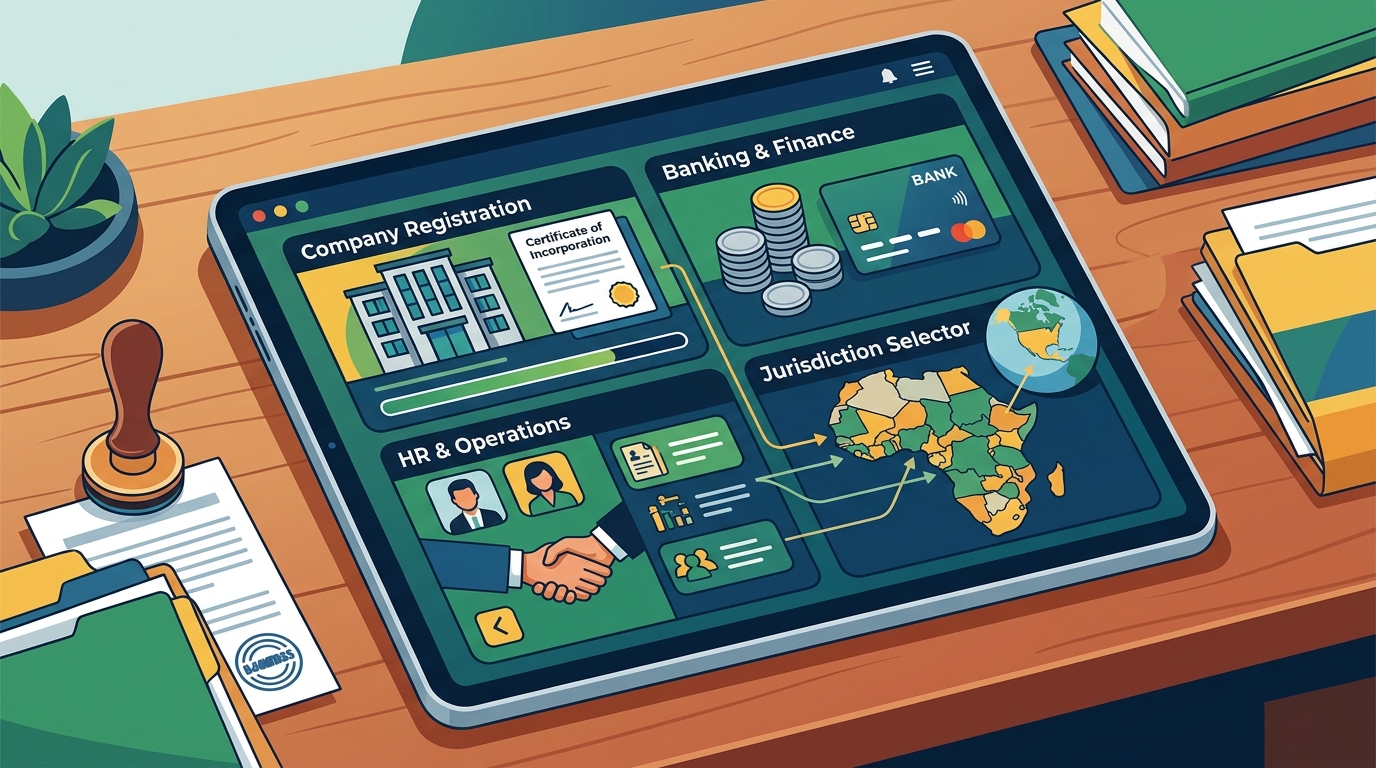
A unified dashboard serves as the central nervous system for your African operations. It aggregates disparate services into one logical workflow. Instead of logging into separate portals for legal filings, banking, and human resources, you manage everything from a single login. This integration is critical for real-time decision-making and financial visibility.
The core value proposition of such a platform is speed and accuracy. By automating the handoff between registration, banking, and HR, the platform reduces the time-to-market for new subsidiaries. It ensures that data entered during the company formation process is automatically synced to the banking and payroll modules. This eliminates data entry errors and ensures consistency across all official records.
According to industry reports on digital transformation in emerging markets, companies using integrated business platforms report a 40% reduction in administrative time spent on compliance. This efficiency allows leadership to focus on growth strategies rather than bureaucratic hurdles. The dashboard provides a holistic view of your continental footprint, showing active entities, pending compliance tasks, and payroll statuses in real time.
Company Registration Process Explained
Company registration is the foundational step in any expansion strategy. The process involves selecting a jurisdiction, reserving a company name, preparing constitutional documents, and filing with the local registrar. Traditionally, this took weeks or months due to manual verification processes. Today, digital platforms have streamlined this into a matter of days.
The platform leverages local legal expertise to ensure that all filings meet current regulatory standards. It handles the preparation of Memorandums and Articles of Association, which define the company's structure and governance. The system also manages the appointment of directors and shareholders, ensuring that all local residency requirements are met where applicable.
One of the most significant advantages is the ability to compare jurisdictions directly within the dashboard. You can evaluate tax incentives, ease of doing business rankings, and sector-specific regulations for countries like Rwanda, Ghana, or South Africa. This data-driven approach allows you to choose the optimal location for your specific business model. For detailed information on available jurisdictions, you can explore the Jurisdictions page to see which markets are currently supported.
Once the registration is complete, the platform issues the Certificate of Incorporation and other statutory documents digitally. This immediate access allows you to proceed to the next steps without waiting for physical mail. The transparency of the process means you can track the status of your application in real time, reducing uncertainty and anxiety during the setup phase.
Corporate Banking Integration
Opening a corporate bank account in Africa has historically been one of the most difficult tasks for foreign entrepreneurs. Banks require extensive due diligence, including proof of address, source of funds, and business plans. This process can take months and often results in rejections due to incomplete documentation.
The unified dashboard solves this by integrating with a network of partner banks across the continent. The platform pre-fills the necessary due diligence documents using the data from your company registration. This creates a consistent and verified paper trail that banks trust, significantly speeding up the approval process. You can open multi-currency accounts in key financial hubs like Lagos, Nairobi, and Johannesburg.
These accounts allow you to hold, send, and receive money in local currencies and USD. The integration ensures that your banking details are automatically linked to your company profile, enabling seamless payroll disbursements and vendor payments. According to financial technology trends in Africa, digital banking integration reduces the average account opening time from 90 days to under 14 days.
Furthermore, the dashboard provides real-time exchange rate visibility and transaction history. This financial clarity is essential for managing cash flow across multiple currencies. You can also access virtual cards for operational expenses, providing better control over spending. For more details on the specific services and packages available, review the Offer page to understand the banking capabilities included in your plan.
HR and Payroll Management
Managing a distributed team across different countries requires a robust HR and payroll system. Each country has unique labor laws regarding contracts, benefits, and termination. The platform provides compliant employment contracts that adhere to local regulations. This ensures that your workforce is protected and that the company remains compliant with local labor standards.
The payroll engine automatically calculates taxes, social security contributions, and other deductions based on the employee's location. It supports multiple payment methods, including bank transfers and mobile money, which is critical in regions where mobile money penetration is high. This flexibility ensures that employees are paid on time, regardless of their preferred method.
Additionally, the platform handles statutory reporting to local government bodies. This includes filing monthly tax returns and annual compliance statements. By automating these tasks, the platform reduces the risk of penalties for late or incorrect filings. It also provides a centralized repository for employee documents, making audits and reviews straightforward. This comprehensive HR solution allows you to hire talent anywhere in Africa without setting up a legal entity in every single country.
Compliance and Regulatory Standards
Regulatory compliance is an ongoing obligation, not a one-time event. Companies must file annual returns, update registered addresses, and renew licenses. The dashboard monitors these deadlines and sends automated reminders. This proactive approach prevents accidental non-compliance, which can lead to fines or the dissolution of the company.
The platform also tracks changes in local legislation. When laws regarding data protection, taxation, or foreign ownership change, the system updates its guidance accordingly. This ensures that your business operations remain aligned with the latest legal requirements. For instance, data localization laws in countries like Nigeria and Kenya require specific handling of customer data. The platform provides guidelines on how to structure your data infrastructure to meet these standards.
Compliance is further supported by the platform's network of local experts. If complex legal questions arise, you have access to professional support. This hybrid model of technology and human expertise provides the best of both worlds: the speed of automation and the nuance of local knowledge. Understanding the specific regulatory landscape is crucial for long-term success. You can learn more about the operational framework by visiting the Invata Africa homepage to see how the platform supports continuous compliance.
Key Takeaways
- Unified Operations: A single dashboard manages registration, banking, and HR, eliminating the need for multiple vendors.
- Speed to Market: Digital registration and banking integration reduce launch times from months to days.
- Compliance Automation: Automated tax calculations and statutory filings reduce the risk of regulatory penalties.
- Multi-Currency Banking: Access to local and USD accounts facilitates seamless cross-border transactions.
- Local Expertise: The platform leverages local legal and banking partners to ensure accuracy in each jurisdiction.
- Scalability: The system allows for easy addition of new entities as your business grows across the continent.
- Data Visibility: Real-time dashboards provide clear insights into financial and operational health.
Frequently Asked Questions
Which countries are supported for company registration?
The platform supports registration in key African jurisdictions including Nigeria, Kenya, Ghana, South Africa, Rwanda, and others. The list of supported countries is regularly updated to reflect new market opportunities.
How long does it take to open a corporate bank account?
With pre-filled documentation and partner bank integration, account opening typically takes between 7 to 14 business days, significantly faster than traditional methods.
Can I hire employees in countries where I do not have a registered entity?
Yes, the platform offers Employer of Record (EOR) services. This allows you to hire local talent legally without establishing a full subsidiary in that specific country.
Is the platform compliant with local data protection laws?
Yes, the platform adheres to data protection regulations such as Nigeria's NDPR and Kenya's Data Protection Act. It ensures that customer and employee data is handled securely and legally.
What are the costs associated with using the dashboard?
Pricing varies based on the number of entities and services required. The platform offers transparent pricing tiers for registration, banking, and HR services. Visit the Offer page for detailed cost breakdowns.
How does the platform handle payroll taxes?
The payroll engine automatically calculates and withholds the correct taxes and social security contributions based on the employee's location and local labor laws.
Do I need a local director for registration?
Requirements vary by country. Some jurisdictions require at least one local resident director, while others allow 100% foreign ownership. The platform guides you through these specific requirements during the setup process.
Start Your Expansion
Expanding into Africa requires a partner who understands the complexity of the continent. Invata Africa provides the technology, expertise, and network you need to launch and grow your business efficiently. Stop managing fragmented processes and start operating with clarity and speed. Book a demo today to see how the platform can streamline your African operations. Visit https://invataafrica.com/ to get started.