

Cost-Benefit Analysis: Africa Business Registration Platforms for Foreign Companies
Establishing a commercial presence in Africa has shifted from a speculative venture to a calculated strategic imperative. According to recent economic forecasts, the African Continental Free Trade Area (AfCFTA) is projected to boost intra-African trade by 52% by 2030, creating a unified market of 1.3 billion people. For foreign enterprises, navigating the fragmented regulatory landscapes of 54 distinct nations presents both immense opportunity and significant operational friction. The core challenge is no longer market access, but the efficiency of market entry. This analysis evaluates the cost-benefit dynamics of utilizing specialized business registration platforms versus traditional legal counsel, focusing on speed, compliance, and long-term scalability.
Understanding the Regulatory Landscape
Africa is not a monolith. It is a collection of diverse legal systems, including common law, civil law, and customary law jurisdictions. For a foreign company, the initial hurdle is determining the correct legal entity structure. Business registration is the foundational step in establishing legal personality. Without it, a foreign entity cannot sign contracts, open bank accounts, or hire local staff legally.
The traditional model involves engaging local counsel in each target country. This approach is fraught with variability. In Nigeria, for instance, the Corporate Affairs Commission (CAC) requires specific documentation that changes frequently. In Kenya, the Business Registration Service (BRS) has digitized many processes, but local nuance remains critical. In South Africa, the Companies and Intellectual Property Commission (CIPC) offers a more streamlined digital interface, yet compliance with the Companies Act 2008 is rigorous. Navigating these differences manually is time-consuming and expensive.
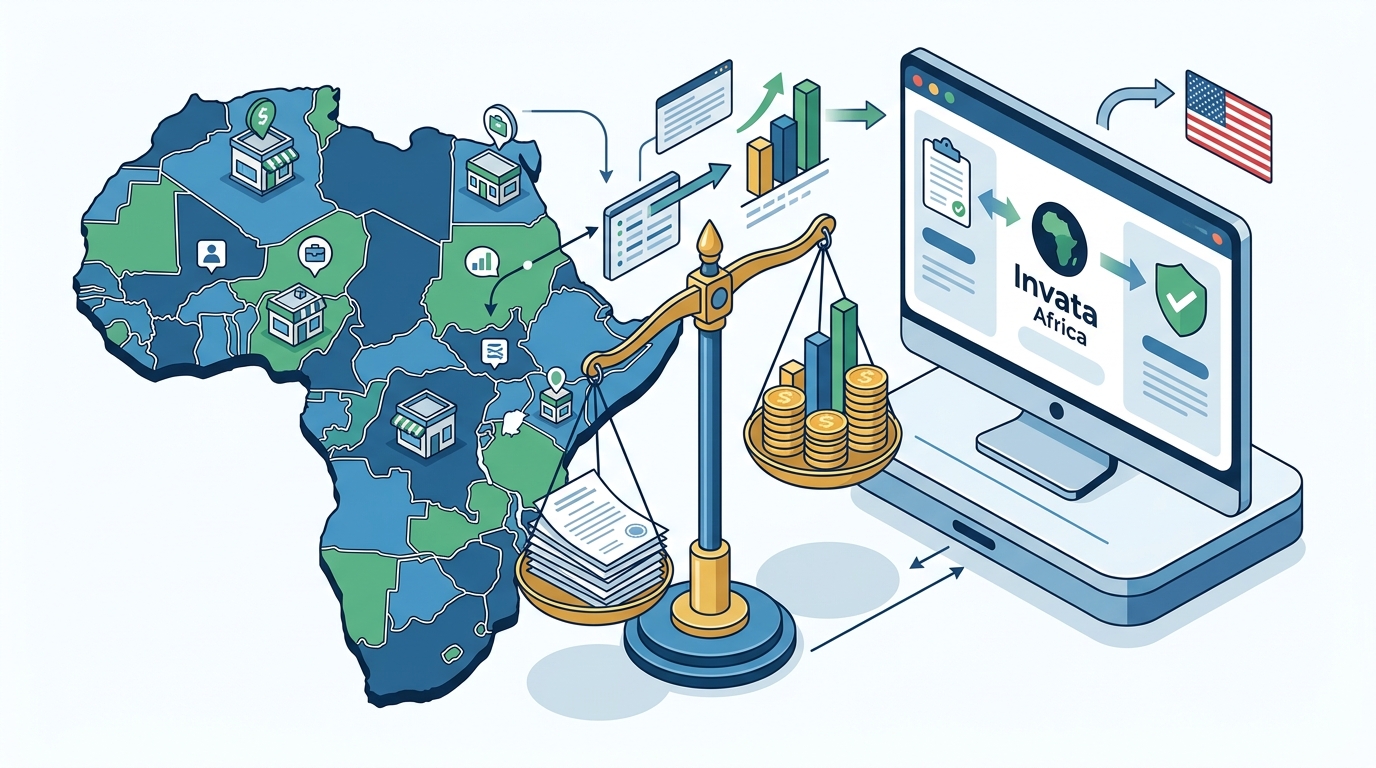
This fragmentation is where specialized platforms like Invata Africa intervene. By aggregating jurisdictional expertise into a single interface, these platforms reduce the cognitive load on foreign executives. They transform a complex legal puzzle into a standardized operational workflow. The value proposition lies in consistency. Whether you are entering Ghana, Rwanda, or Senegal, the platform provides a uniform standard of service delivery, ensuring that no jurisdiction is overlooked due to administrative fatigue.
Comparing Cost Structures
When conducting a cost-benefit analysis, the immediate financial outlay is the most visible metric. However, the true cost of market entry includes hidden expenses: legal retainer fees, translation costs, notarization delays, and the opportunity cost of delayed market entry.
Traditional Legal Counsel Costs
Hiring local law firms in major African hubs typically involves hourly rates ranging from $150 to $500 per hour for junior associates, and significantly more for partners. A standard company formation process can take 4 to 8 weeks. During this time, your capital is tied up in administrative limbo. Furthermore, legal fees often exclude government filing costs, which vary wildly by country. In some jurisdictions, government fees are nominal, while in others, they constitute a significant portion of the total cost.
Platform-Based Service Costs
Digital registration platforms operate on a subscription or fixed-fee model. This transparency allows for precise budgeting. For example, platforms offering comprehensive packages often include not just registration, but also registered office addresses, nominee directors where legally permissible, and initial compliance checks. The offer structures are designed to scale with your business needs, providing predictable cash flow management for foreign investors.
The cost benefit here is not just in the lower upfront fee, but in the speed. Time is money. A platform that reduces registration time from 8 weeks to 2 weeks allows your business to start generating revenue 50% faster. This acceleration of time-to-market often outweighs the premium paid for platform convenience.
Strategic Benefits of Digital Platforms
Beyond cost savings, the strategic advantages of using a dedicated registration platform are substantial. These platforms act as a force multiplier for your operational efficiency.
Standardization and Scalability
For companies planning to enter multiple African markets, standardization is key. Managing five different law firms across five different countries creates administrative chaos. A platform like Invata Africa provides a single point of contact and a unified dashboard. This allows your headquarters to monitor the status of all entities in real-time. It simplifies reporting, tax compliance, and corporate governance across borders.
Access to Local Expertise
Foreign companies often underestimate the importance of local nuance. What works in Lagos may fail in Nairobi. Platforms mitigate this risk by employing local experts who understand the unwritten rules of business in each jurisdiction. They provide guidance on cultural expectations, banking requirements, and labor laws that are rarely documented in official government guides. This implicit knowledge is invaluable for avoiding costly mistakes.
Post-Registration Support
Registration is just the beginning. Ongoing compliance, annual returns, and tax filings are continuous obligations. Platforms often bundle these services, ensuring that your entities remain in good standing. Failure to comply can result in heavy fines or the dissolution of your company. By automating these reminders and filings, platforms protect your investment in the market.
Risk Mitigation and Compliance
The primary risk in African market entry is regulatory non-compliance. Governments are increasingly tightening their oversight of foreign businesses. Anti-money laundering (AML) and know-your-customer (KYC) regulations are stricter than ever. Platforms are designed to navigate these waters safely.
Compliance is the bedrock of sustainable business operations. By leveraging a platform's vetted network of local partners, you ensure that your documentation meets the latest regulatory standards. This reduces the risk of rejection, delays, or legal penalties. Furthermore, platforms often provide access to legal counsel for complex issues, bridging the gap between standard automation and bespoke legal advice.
Another risk is data security and corporate governance. Platforms provide secure digital vaults for your corporate documents, ensuring that your intellectual property and sensitive data are protected. This is particularly important for tech companies and financial services firms that handle large volumes of sensitive information.
Platform Comparison Matrix
To help you make an informed decision, here is a comparison of the key features offered by specialized platforms versus traditional methods.
| Feature | Traditional Legal Counsel | Digital Registration Platform |
|---|---|---|
| Time to Registration | 4-8 Weeks | 1-3 Weeks |
| Cost Predictability | Low (Hourly Rates) | High (Fixed Fees) |
| Multi-Jurisdiction Management | Complex (Multiple Vendors) | Simple (Single Dashboard) |
| Ongoing Compliance | Manual Tracking | Automated Reminders |
| Local Expertise Access | Variable | Consistent & Vetted |
Key Takeaways
- Speed to Market: Digital platforms can reduce registration time by up to 75% compared to traditional methods, allowing faster revenue generation.
- Cost Efficiency: Fixed-fee models provide budget certainty, eliminating the unpredictability of hourly legal billing.
- Scalability: A single platform allows for the management of entities across multiple African jurisdictions from one interface.
- Compliance Assurance: Automated compliance tools reduce the risk of penalties and corporate dissolution due to administrative errors.
- Local Nuance: Access to vetted local experts ensures that cultural and regulatory nuances are respected in every market.
- Strategic Focus: Outsourcing registration allows foreign companies to focus on core business activities rather than administrative burdens.
- Unified Governance: Centralized document storage and reporting simplify corporate governance for multinational operations.
Frequently Asked Questions
Is it legal to use a platform for business registration in Africa?
Yes, it is entirely legal. Platforms act as facilitators, connecting you with licensed local professionals who handle the actual filing with government authorities. They do not replace the legal requirement for local registration but streamline the process.
Which African countries are best for foreign business registration?
Key markets include South Africa, Kenya, Nigeria, Ghana, and Rwanda. Each offers different advantages, from South Africa's robust financial sector to Rwanda's ease of doing business rankings. The choice depends on your specific industry and target customer base.
How long does it take to register a company using a platform?
Typically, registration can be completed in 1 to 3 weeks, depending on the jurisdiction and the completeness of your documentation. This is significantly faster than the 4 to 8 weeks often required through traditional channels.
Do platforms offer ongoing compliance services?
Yes, most platforms offer annual compliance packages that include filing annual returns, managing tax registrations, and providing registered office services. This ensures your company remains in good standing with local regulators.
What is the cost difference between platforms and law firms?
Platforms generally offer lower and more predictable costs. While law firms charge hourly rates that can escalate quickly, platforms provide fixed fees for standard services, making budgeting easier for foreign investors.
Can I register a company in multiple African countries through one platform?
Absolutely. This is one of the primary benefits of using a platform. You can manage registrations, compliance, and reporting for multiple countries from a single dashboard, simplifying your multinational operations.
Are the local partners vetted by the platform?
Yes, reputable platforms like Invata Africa rigorously vet their local partners to ensure they meet high standards of professionalism, legal expertise, and ethical conduct.
Next Steps for Market Entry
The opportunity to expand into Africa is vast, but it requires a strategic and efficient approach to market entry. By leveraging a specialized registration platform, you can reduce costs, accelerate time-to-market, and ensure compliance across multiple jurisdictions. Do not let administrative complexity hinder your growth.
Take the first step toward establishing your presence in Africa. Visit Invata Africa to explore our comprehensive services and start your journey with confidence. Our team is ready to help you navigate the complexities of African business registration and unlock the continent's immense potential.